Jacob Campbell, Ph.D., LICSW
These are my presentations. My name is Jacob. I enjoy sharing ideas and developing helpers. I am an associate professor at Heritage University. I am sharing my presentations here to give ease of access for my students and so others can hopefully find useful information to learn and grow.
Recent Presentations
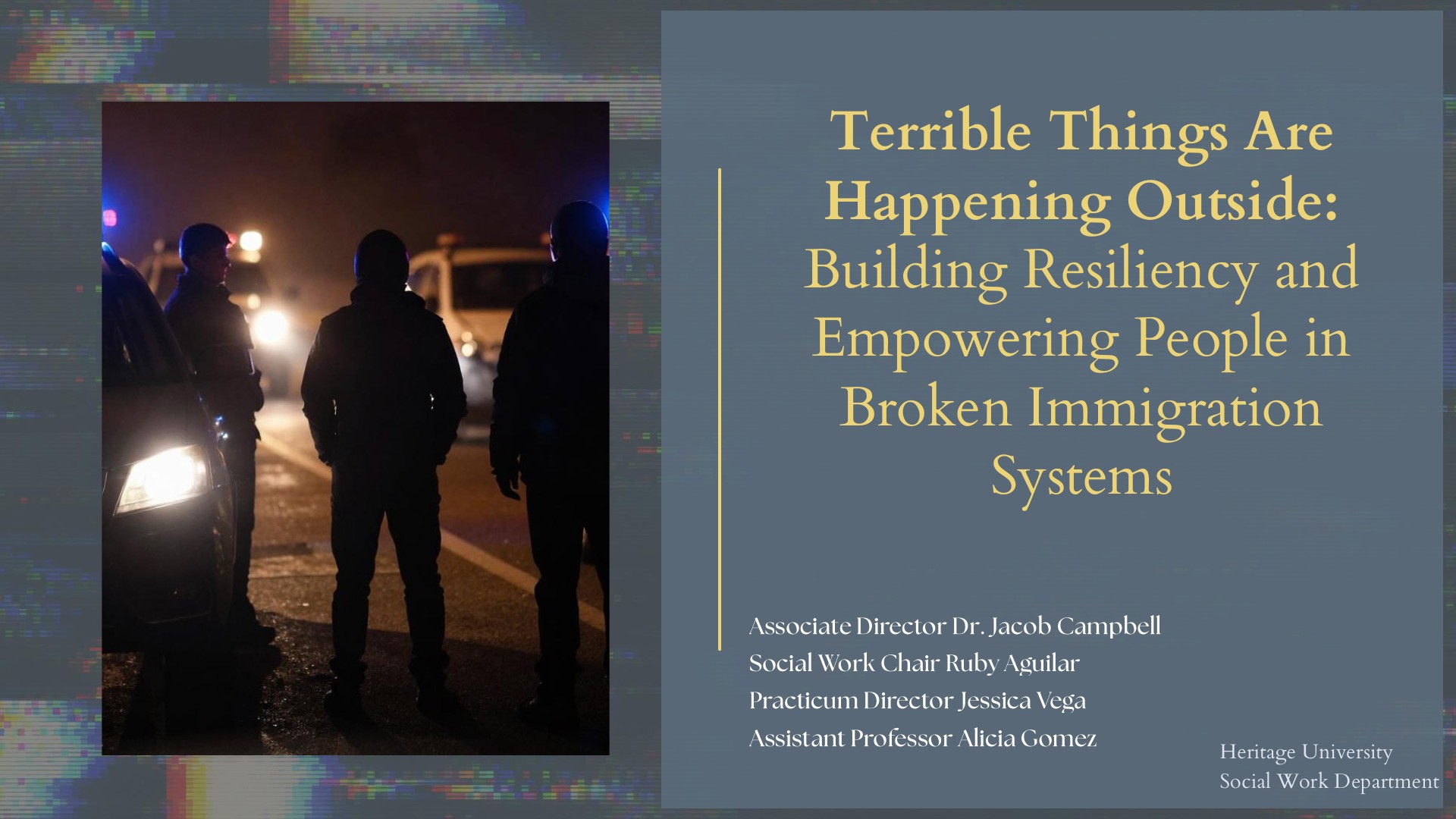
- Date:
- October 2026
- Co-presenters:
- Ruby Aguilar, Jessica Vega, and Alicia Gomez
Immigration enforcement is reshaping the communities social workers serve: detention has become an expanding industry, enforcement reaches schools, courts, and workplaces, and fear keeps families from work, school, medical care, and social services. This 60-minute interactive workshop from Heritage University’s Social Work Department opens with a short skit and a brief overview of the impact of ICE on communities, then describes how one Hispanic-Serving, rural university has responded with guidance for faculty, staff, and students in practicum placements. Participants then rotate through three hands-on stations, assembling a community whistle kit, practicing how to safely witness and document an ICE encounter, and building a personal or community safety plan, and leave with tools and materials they can adapt for their own practice settings.
This presentation is a conference session for the 2026 CSWE Annual Conference in Atlanta Georgia. It was developed and presented by the following:
- Jacob Campbell, Ph.D. LICSW (HU Associate Professor, Associate Social Work Director)
- Ruby Aguilar, LICSW (HU Associate Professor, Social Work Chair, BSW Director)
- Jessica Vega, MSW (HU Assistant Professor, Practicum Director)
- Alicia Gomez, MSW (HU Assistant Professor)